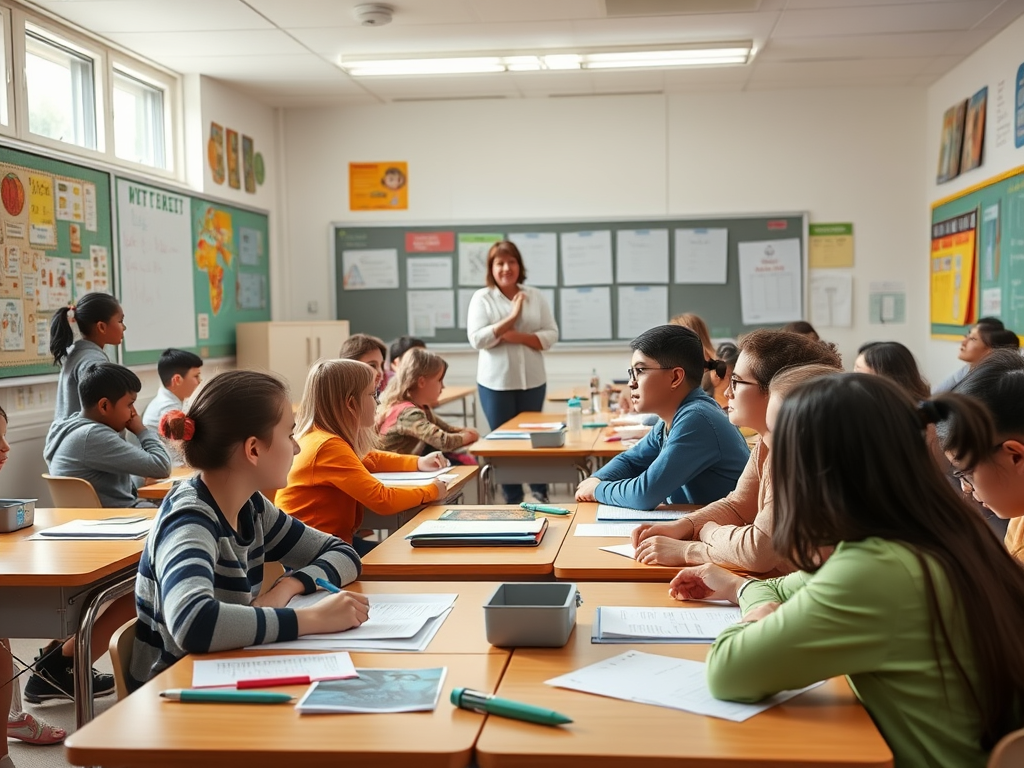
Many individuals who come to Japan to teach enter the profession with little to no prior training, experience, or qualifications. As a result, they may lack awareness of effective classroom management strategies that can enhance their teaching practice and create optimal learning environments. Today, we will explore key classroom management techniques and constructivist approaches that can empower new teachers to positively impact the educational outcomes of their students.
While it is often argued that dynamic, well-planned, and engaging lessons naturally minimize behavioral issues, the reality is that not all lesson content will captivate every learner. There will inevitably be moments when the material, though necessary, might not align with the interests or preferences of all students. In such cases, understanding and implementing effective classroom strategies becomes crucial to maintaining a productive and inclusive learning environment.
I have observed that learners tend to respond well to positive learning strategies that emphasize their strengths rather than focusing on criticisms (Schindler, 2009). However, it is important to acknowledge that various other learning strategies can contribute equally to effective classroom management (Mayer, 1988). I recognize the potential for personal bias in favoring certain strategies and recommend that readers critically evaluate the approaches most suitable for their contexts.
Returning to positive learning strategies, continuous positive reinforcement has been shown to establish recognizable behavior patterns (Lee, 1997), which helps to clarify and reinforce expectations. This aligns with the observations of B.F. Skinner, who, as early as 1938, demonstrated the significance of reinforcement in shaping behavior (Skinner, 1938). An effective way to support this is by highlighting exemplary behaviors among learners to encourage their peers to emulate these actions.
Educators can further guide students in demonstrating expected behaviors by designing interactive learning environments that promote critical thinking and effective communication. Additionally, modeling the behavior we expect from students is vital; learners often take cues from the actions of authority figures in their lives.
When using positive learning strategies, it is essential to ensure that praise is neither overused nor insincere. Overusing praise can diminish its impact, leading to demotivation or even resentment among learners. Furthermore, learners may begin to seek constant validation from the teacher, which shifts the focus away from intrinsic rewards, such as the satisfaction of mastering a skill, learning a lesson, or completing a task.
As Deci et al. (1999) noted, praise should reinforce a learner’s sense of autonomy and competence. This can be achieved by fostering a growth mindset through meaningful and task-specific praise. For example, “I noticed that you tried really hard on your work today” is much more effective than a generic “Great job!”—a phrase that, in my professional opinion, is overused as an empty compliment in the English language teaching industry. Associating praise with effort helps reinforce the connection between perseverance and success, creating a more impactful and lasting learning experience.
There are excellent examples of how positive and constructivist learning strategies can improve behavioral outcomes (Helman, 2017), but their implementation often depends on the scope of your role in the classroom. For Assistant Language Teachers (ALTs) and Eikaiwa instructors, the ability to enforce discipline directly is typically limited. Instead, these roles often rely on passive discipline procedures, such as modeling expected behavior or encouraging positive interactions, rather than directly disciplining students.
A key factor in managing classroom behavior is establishing a strong rapport with students while maintaining clear professional boundaries. It is crucial that students view you as a teacher rather than a friend or entertainer—a common pitfall for individuals new to teaching. Once students perceive the relationship as overly informal, it can be challenging to regain authority and maintain focus as the academic year progresses. Striking the right balance between approachability and professionalism helps create a respectful and effective learning environment.
However, cultivating a professional relationship with students does not mean sacrificing approachability. Positive learning strategies thrive on mutual respect and a shared understanding of classroom expectations. By setting clear boundaries early, modeling desired behaviors, and consistently reinforcing positive actions, educators can create a learning environment where students feel both supported and motivated to succeed. Striking this balance between rapport and professionalism is essential for fostering constructive classroom dynamics and ensuring that educators, regardless of their specific role, are equipped to guide their students toward meaningful academic and personal growth.
References
Deci, E. L., Koestner, R., & Ryan, R. M. (1999). A meta-analytic review of experiments examining the effects of extrinsic rewards on intrinsic motivation. Psychological Bulletin, 125(6), 627–668.
Helman, D. (2017). Constructivist Discipline for a Student-Centered Classroom. _Online Submission_, _21_(3), 64-69.
Lee, D. L., & Belfiore, P. J. (1997). Enhancing classroom performance: A review of reinforcement schedules. Journal of Behavioral Education, 7, 205-217.
Mayer, R. E. (1988). Learning strategies: An overview. Learning and study strategies, 11-22.
Shindler, J. (2009). Transformative classroom management: Positive strategies to engage all students and promote a psychology of success. John Wiley & Sons.
Skinner, B. F. (1938). The behavior of organisms: An experimental analysis. New York, NY: D. Appleton-Century Company.


Leave a Reply